





How do I help my new rescue puppy settle in?
 By Dr. Steve Pelton, DVM
The short answer
- Give him time. A quiet house, the same routine every day and a safe spot to hide do more than anything else in the first two weeks.
- Let him come to you. Don't force greetings, and don't pull him out from under the table.
- Soft poop, a little hiding and a skipped meal on day one are common. A cough, diarrhea in a puppy who isn't done with his shots, or not eating after a couple of days are calls to your vet.
- See your vet in the first few days, and bring every paper the shelter or rescue gave you, plus a fresh stool sample.
- Growling, snapping, or fear that isn't easing after a few weeks: talk to your vet early. It's much easier to help a young dog.
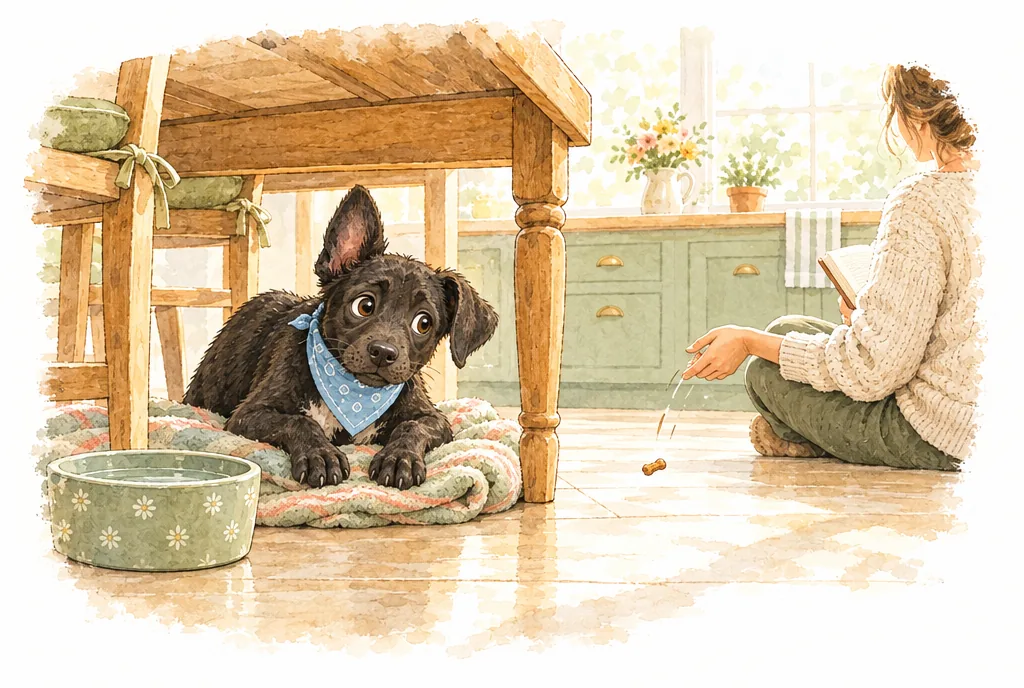
If you just brought home an older puppy or a rescue and he's hiding, not eating much or looking at you like you're a stranger, that's a lot more common than it feels at 11 at night. He's been through a shelter, maybe a foster home, maybe a long van ride. Your house is one more big thing. Most rescues settle bit by bit, and there's plenty you can do to help.
Tap a stop
The 3-3-3 idea: a rough guide, not a deadline
Many shelters use it: about 3 days to unwind, 3 weeks to learn the routine, 3 months to feel at home. Some puppies go faster and some take longer. Slower isn't failing.
The first 3 days: unwinding
Everything is new, and a lot of puppies shut down a little. That's not a bad sign. It's a puppy taking it all in.
Usually normal
- Hides, or watches from under a table
- Sleeps a lot, or can't seem to settle
- Eats little the first day
- Soft poop
- A few accidents, even in an older pup
What helps
- A quiet house: no parties, no visitors lining up
- A safe spot to hide, and nobody pulls him out
- Meals, potty trips and bedtime at the same times
- Let him come to you
The first 3 weeks: learning the routine
He's figuring out how your house works: when food shows up, where the door is, who's who. Some of his real personality starts to peek out.
Usually normal
- More curious, more playful
- New quirks you didn't see on day one
- Testing a few rules
- Still unsure of some people or places
What helps
- The same routine every day
- Short, easy training with treats
- New things one at a time, at his pace
- A first vet visit in the first few days, then any follow-ups
The first 3 months: feeling at home
Most rescues feel truly at home by now. He knows the routine, he knows his people, and you know what's normal for him.
Usually normal
- Relaxed most of the day
- Trusts the routine
- Comes to find you
What helps
- Keep the routine going
- Keep working, gently, on anything that still worries him
- Celebrate a gotcha day
The first two weeks: keep it small and boring
Decompression just means giving him room to unwind before the world gets bigger. Boring is good here.
- A quiet routine: meals, potty trips, naps and bedtime at about the same times every day.
- A safe spot he can retreat to, like a crate with the door open, a pen or a bed in a quiet corner. Nobody follows him there.
- Not too many visitors, and no big outings. The dog park and the family barbecue can wait.
- Short walks or yard time, then home again.
- If he's never seen a crate, go slow: door propped open, a soft bed and a treat inside, meals next to it. A gated room works while he settles.
- Older puppies can usually hold it longer than an 8-week-old, but a new place brings a few accidents anyway. Clean up, no scolding, and take him out more often.
Reading the shelter or rescue records
Rescue folders are often thin, and that's nobody's fault. Rescues do a lot with very little. Here's what's usually inside:
- Shots, often labeled DHPP or DAPP (the main puppy combination shot) and sometimes rabies
- Dewormer dates, and any flea or heartworm prevention
- Medicines he's had, like antibiotics for a cough
- A microchip number, often registered to the rescue
- Whether he's been spayed or neutered
- Sometimes a stool test or a heartworm test for an older puppy
Bring the whole folder, even a sticky note, to the first vet visit in his first few days, with a fresh stool sample. For each shot your vet wants to know what it was, when it was given and who gave it. "Had his shots" doesn't say enough, so missing details usually mean a catch-up plan, not a problem. How catch-up shots work is on why puppies need so many shots. And if his microchip is registered to the rescue, ask how to move it to your name that same week.
Common first-week things, and which door
Each one has a door: WATCH means usually normal, keep an eye on it. CALL TODAY means call your vet today, or the after-hours line at night. GO NOW means head to your vet or the nearest emergency clinic.
Soft poop
Stress and a change of food both show up in the poop first, so softer stools for the first few days are common. Ask the shelter or rescue what he's been eating and switch slowly.
 WATCHSoft, in a bright puppy who's eating, and he's done with his shots
 CALL TODAYAny diarrhea if he isn't done with his shots, even if he's acting fine. Call right away
 GO NOWDiarrhea with tiredness, vomiting or not eating, or black or bloody poop
A honking cough
Shelters and transports mean lots of dogs close together. Kennel cough usually starts 5 to 10 days after that, so it often shows up once he's home. Keep him away from other dogs until your vet says he's clear.
- CALL TODAYA honking cough in a puppy who's bright and eating
- GO NOWStruggling to breathe, won't eat, or very tired
Hiding
Plenty of rescues spend the first days under a table or behind the couch. Let him. Put water nearby, sit in the room doing something boring, and let him come out when he's ready.
- WATCHHides the first days but comes out for food, potty trips or a treat
- CALL TODAYStill hiding much of the day, or very fearful, after the first couple of weeks
Not eating the first day
A nervous puppy often picks at his food on day one. Offer it somewhere quiet, step away, and try again at the next meal.
- WATCHA bigger puppy who skips a meal or two the first day and is otherwise bright
- CALL TODAYStill not eating after a couple of days, or quiet and not eating at all
- GO NOWA toy-breed puppy who skips even one meal and seems quiet, or any puppy who's weak or wobbly
Fear basics
A scared puppy isn't being stubborn or rude. Fear is a feeling, and you can't push it out of him. What works is letting him decide when he's ready, and making the brave choice pay off.
- Let him come to you. Sit low, turn a little sideways and let him sniff.
- Don't force greetings. No passing him around, no reaching over his head.
- Treat and retreat: toss a treat near him, then toss the next one a little behind him, so he can step away and choose to come back.
- Short, easy wins. Stop while he's still relaxed.
- Don't punish growling. It's a warning, and you want to keep it.
Scared of the leash or collar
Lots of rescues have never worn a leash, or the only time they did was a stressful day. Go slow and make it mean good things. Any one of these steps can take a few days.
- Wear it firstLet him wear the collar or a harness indoors for short stretches while he eats or plays. Treats every time it goes on.
- Pair the leash with good thingsShow the leash, give a treat, put it away. Clip it on at mealtime. The leash starts to mean good stuff.
- Let him drag a light lineIndoors, with you watching, let him trail a light leash or line for a few minutes so the feel of it becomes boring. Never leave it on when you can't watch him.
- Tiny stepsPick up the end and follow him around the room. Then a few steps together. Then the yard. Short, happy, and stop before he gets worried.
- Never drag himIf he freezes or puts the brakes on, wait, toss a treat, and make it easier next time. Pulling a scared puppy along makes the fear bigger.
Hiding from one person
It's often a man, someone tall, or someone with a deep voice. That doesn't mean anyone hurt him. Many puppies just met fewer people like that early on. The fix is the same either way: that person becomes the source of good things, and never the one who pushes.
- That person feeds him. Set the bowl down, then step back.
- Sit low, on the floor or a low chair, side-on instead of facing him.
- Ignore him at first: no eye contact, no talking to him, no reaching.
- Toss treats his way, a little farther from you each time, so he never feels trapped.
- Never reach over his head or corner him. Let him do the approaching.
- Everyone else in the house plays it cool too, so nobody pushes it.
When to get help
Talk to your vet if you see:
- Growling or snapping at people or pets
- Still not eating after a couple of days
- Still hiding most of the day, or very fearful, after the first few weeks
- Panic in the crate: drooling, frantic, or hurting himself trying to get out
- Fear that's getting worse instead of better
Your vet checks for pain or illness first, since a sore belly or ear can look like fear or grumpiness. Then ask about a qualified behavior professional: a veterinary behaviorist, or a trainer who uses reward-based methods. Asking for help early is a sign you're paying attention, not a sign you failed.
Got kids at home too? Keep the first weeks extra supervised and give him a kid-free retreat. Puppies and kids has the rules, and Read the tail shows the worried signs.
Questions I get every day
What is the 3-3-3 rule for a rescue dog?
It's a rough guide many shelters use: about 3 days to unwind, 3 weeks to learn your routine, and 3 months to feel at home. Some puppies go faster and some take longer. It's a reminder to be patient, not a deadline, and a rescue who's slower than that isn't failing.
Should I crate train an older rescue puppy?
Yes, slowly. Set the crate up with the door propped open, put a soft bed and a treat inside, and feed meals next to it, then just inside. Close the door only once he walks in on his own and relaxes there. If the crate scares him, a gated room or pen works while he settles. A puppy who panics in a crate needs a different plan, so talk to your vet.
The shelter says he had his shots. Does he need more?
Often, yes. A puppy needs a series, with the last shot after 16 weeks, and your vet needs to know what each shot was, when it was given and who gave it. Bring every paper to the first visit and your vet will make a catch-up plan.
How soon should my rescue puppy see a vet?
In the first few days, even if he seems healthy and the rescue had him checked. Bring the whole folder, however thin, and a fresh stool sample. Missing records are common and that's OK. Ask your vet to scan his microchip, and if it's registered to the rescue, transfer it to your name that week.
When can my rescue meet my other dog or cat?
Slowly, and after both are on prevention and the pets at home are up to date on shots. Dogs can meet in the yard on loose leashes with a calm helper, for short visits. With a cat, the cat sets the pace from up high or behind a gate. Separate bowls, beds and toys at first. Some cats take weeks, and that's normal.
When can friends and family come meet him?
Give him the first few days with just the household. After that, one calm visitor at a time works best. Ask them to sit down, ignore him and toss a treat, and let him decide whether to say hello.
Where this comes from
- American Veterinary Society of Animal Behavior (AVSAB). Humane Dog Training Position Statement. 2021.
- American Animal Hospital Association (AAHA). 2015 Canine and Feline Behavior Management Guidelines.
- ASPCA. Fearful dogs and fear of people (behavior resources). aspca.org.
- Merck Veterinary Manual. Canine infectious respiratory disease (kennel cough).
- American Animal Hospital Association (AAHA). 2022 Canine Vaccination Guidelines.
General education, not veterinary advice. Your vet's plan for your puppy comes first.