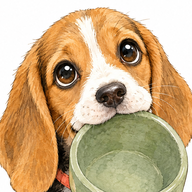
Going out before the shots are done
When can my puppy go outside?
By Dr. Steve Pelton, DVM
Here's the short version
- You don't have to choose between socializing your puppy and protecting him. You can do both, carefully.
- The socialization window starts closing around 12 to 14 weeks. The vaccine series runs past 16 weeks. If you wait for the shots to finish, you miss the window.
- Carry him, use a stroller, visit friends with healthy vaccinated dogs, and go to a well-run puppy class. Skip dog parks and busy public dog areas until the series is done.
- Good experiences beat lots of experiences. Let your puppy set the pace.
Two clocks that don't line up
Researchers at Ohio State describe a puppy's socialization period as running from about 3 weeks of age to about 12, possibly 14, weeks. During those weeks his brain is set up to file new things under "normal": the vacuum, a man in a hat, a car ride, the exam table at the vet. After the window starts to close, new things are more likely to land in the "scary" file. Puppies still learn after 14 weeks. It just takes more time and patience.
The puppy vaccine series doesn't finish until after 16 weeks. Put the two side by side and you can see the problem. Keep him inside until the shots are done, and he spends his whole socialization window on your couch.
I watched this happen with the puppies who grew up during COVID. They stayed home right when they needed to meet the most people, places and things, and when life went back to normal, a lot of them struggled. Nobody did anything wrong. A puppy's brain just has a schedule of its own.
What the guidelines say
This is the mainstream position, not me going out on a limb. The American Veterinary Society of Animal Behavior (AVSAB) says socialization before a puppy is fully vaccinated should be the standard of care. It also points out that behavior problems, not infectious diseases, are the number one cause of death for dogs under three years old. That's why vets care so much about this.
Safe now, careful, and not yet
Here's the traffic-light version. Your vet knows what's going around in your area, so check it with them.
Green: safe now
- Your home, your car and your own yard (unless a dog with parvo has been there).
- Outings where you carry him or use a stroller.
- Friends' homes with healthy, vaccinated adult dogs.
- A well-run indoor puppy class.
- New sounds, surfaces and people: the vacuum, a wobbly cushion, someone in sunglasses, a delivery driver.
- Gentle handling every day: paws, ears, mouth and tail, with treats.
Yellow: careful (carry him)
- Pet-store floors, sidewalks and building entrances with lots of dog traffic. He can see and smell it all from your arms.
Red: not yet, until the shots are done
- Dog parks, apartment dog-relief strips and public grass that lots of unknown dogs use.
- Any dog who's sick, or any dog whose vaccine history you don't know.
- Anywhere a dog has had parvo. The virus can live in shady ground for months, possibly years.
Dog parks are only on the red list for now. Once the puppy series is done, a good dog park is a great place for a young dog to burn off energy and learn to get along with other dogs. Skip it if a dog there looks sick, and leave if the play gets too rough.
Puppy class before the shots are done
A good class is one of the best socialization tools there is. Puppies can start as early as 7 or 8 weeks, as long as they had a first set of shots at least a week before class and a first deworming. In a 2013 study of 279 vaccinated puppies in socialization classes, none got parvo. Look for a class that's indoors on floors that can be cleaned, asks for vaccine records, groups puppies by age and uses reward-based training only.
Apartment life: the potty problem
Most complexes have one patch of grass where every dog goes, which is exactly the kind of place parvo likes. Pick a potty spot away from it, or use an indoor or balcony potty patch for the first few weeks. Carry him through hallways and elevators. The ding, the neighbors and the new smells are free socialization, and his paws never touch the floor.
After the last shot
Give it four or five days after the last puppy shot before dog parks, daycare or boarding. Parvo protection from the vaccine is usually there by about 5 days. Daycares, boarding kennels and groomers set their own vaccine rules, so ask before you book.
Good experiences, not a scavenger hunt
Nobody gets a prize for meeting 100 strangers. The goal is for your puppy to come away from new things thinking, that was fine, maybe even good. Start at a distance where he notices the new thing but stays relaxed, pair it with a treat, let him choose to go closer, and keep it short. A tucked tail, ears back, lip licking, yawning when he's not tired, freezing or hiding all mean "too much." Back off and try again another day.
Some puppies are bolder than others, and that's normal. But a puppy who hides, trembles or can't settle after new experiences isn't being stubborn, and he usually won't just grow out of it. Tell your vet. Starting early makes a big difference.
Questions I get every day
Can I take my puppy to the pet store before his shots are done?
Yes, if you carry him or put him in a cart or stroller. Pet stores are full of new sights, sounds and smells, which is great socialization. Just keep his paws off the floor, where lots of dogs with unknown vaccine histories have walked.
My friend's dog is vaccinated. Can they play?
Usually, yes, if the dog is a healthy, vaccinated adult who's gentle with puppies. A calm grown dog is one of the best teachers your puppy can have. Keep the first visits short and supervised.
Is puppy class safe before the shots are done?
A well-run class is. Puppies can start as early as 7 or 8 weeks if they had a first set of shots at least a week before class and a first deworming. Look for a class that's indoors on cleanable floors, asks for vaccine records and turns away sick puppies. Keep his shots up to date all the way through.
How long after the last puppy shot can he go to the dog park?
Give it four or five days after the last puppy shot before dog parks, daycare or boarding. Parvo protection from the vaccine is usually there by about 5 days. Daycares, boarding kennels and groomers set their own vaccine rules, and many want a kennel cough shot too, so ask before you book.
My puppy is 4 months old and we missed most of the window. Is it too late?
No. He'll still learn, just more slowly. Keep going, keep every new experience easy and positive, and let him watch from a distance first. If you see fear, like hiding, trembling or not being able to settle, call your vet sooner rather than later.
Keep going
The guides cover the socialization clock week by week, why puppies need a series of shots, and how to read your puppy's body language when something new is too much. Got a toy breed, a giant or a flat face? Check the breed corners.
Where this comes from
- American Veterinary Society of Animal Behavior (AVSAB). Position Statement on Puppy Socialization. 2008.
- Herron M, Stull J. Balancing puppy socialization with infectious disease prevention. The Ohio State University College of Veterinary Medicine.
- American Animal Hospital Association (AAHA). 2019 Canine Life Stage Guidelines.
- Stepita ME, Bain MJ, Kass PH. Journal of the American Animal Hospital Association. 2013;49(2):95-100.
- World Small Animal Veterinary Association (WSAVA). Vaccination guidelines FAQ. 2016.
- Merck Veterinary Manual. Canine parvovirus infection. 2025.
General education, not veterinary advice. Your vet's plan for your puppy comes first.