





My puppy is throwing up. What should I do?
 By Dr. Steve Pelton, DVM, a small-animal vet since 2000.
The short answer
- Once, and he's bright, playful and eating afterward: usually fine. Watch him.
- More than once in a day, or he's quieter than usual: call your vet today.
- Over and over, can't keep water down, a swollen belly, or vomiting with a tired, flat puppy: go now.
- Might have swallowed a sock, a toy piece, string or a corn cob? Call right away even if he seems fine, and go now if he's vomiting.
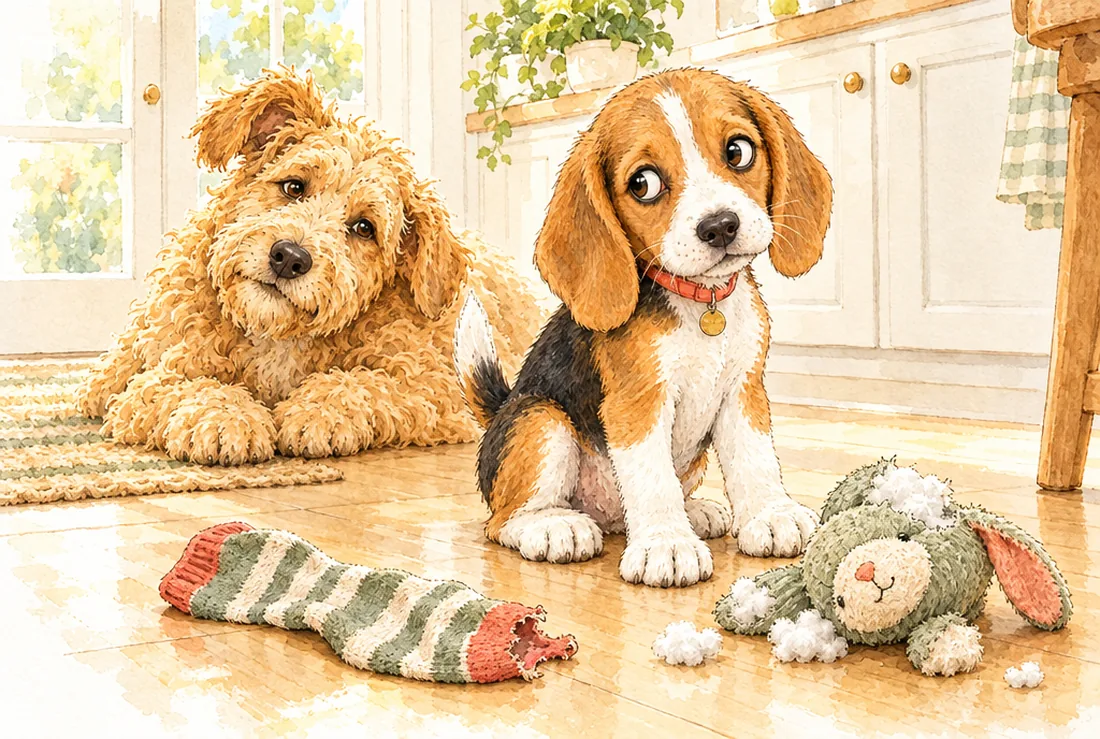
If you're reading this with a towel in one hand and a puppy watching you from the corner, start here. Puppies throw up. They eat too fast, they eat grass, they eat things that were never food. Most of the time it's one and done. The trick is telling that apart from the times it isn't, and the best clue isn't the vomit. It's the puppy.
Three quick taps
Which door is he at?
The vomit tells you a little. How your puppy is acting tells you a lot more. Answer the first two, tick anything else that fits, and you'll land on one door.
Pick an answer for 1 and 2 to see the door.
Not sure which one fits? That's a call. Call your vet. General education, not veterinary advice. Your vet's plan for your puppy comes first.
Why puppies run out of fuel fast
Think of it like a phone battery. A grown dog starts the day full. A tiny puppy starts close to empty, and anything that drains him, like vomiting, a skipped meal, being cold or a gut full of worms, gets him to zero quickly.
A grown dog
Fat, stored sugar and plenty of body water. A rough day costs him a little.
A young puppy
Smaller reserves. Vomiting or diarrhea can dry him out in hours, not days.
A toy-breed puppy
Almost nothing in the tank. A missed meal can let his blood sugar slide.
That's why a toy-breed puppy who's vomiting or skips even one meal and seems quiet needs a call to your vet and a trip in, and a weak, wobbly or trembling one is a GO NOW. More on toy-breed puppies and low blood sugar.
Vomiting or regurgitation? Your vet will ask
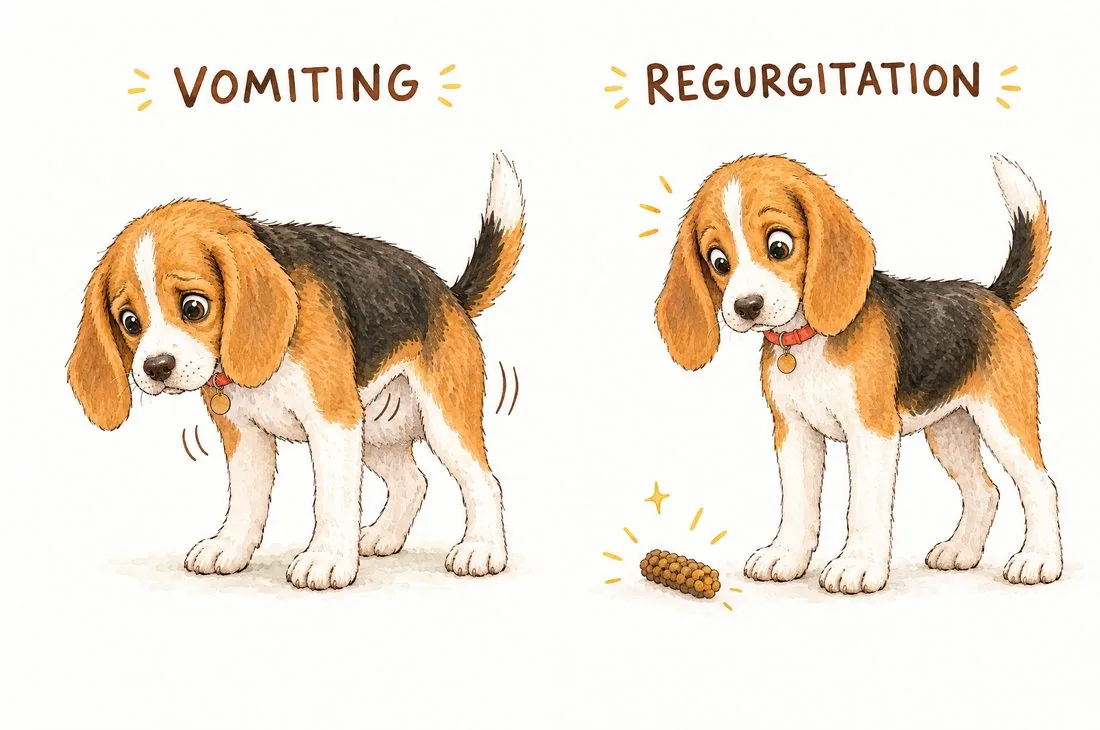
Vomiting
- Active, with a warning first: drooling, lip licking, pacing
- Then heaving, with the belly squeezing hard
- Often partly digested, sometimes with yellow fluid
- Usually starts in the stomach or intestines
Regurgitation
- Passive, no big heave
- Often right after eating, especially in a gulper
- Looks almost like it did going down, sometimes tube-shaped
- Usually means the food never reached the stomach
You don't have to sort it out yourself. Just notice what happened and, if you can, take a short video. It answers the question faster than any description.
What goes in, and where it can get stuck
Puppies taste the world, and sometimes the world goes down. Vets have a name for anything swallowed that isn't food: a foreign body. Some pass on their own. Some don't, and nobody can tell which from the outside.
What goes in
Socks, underwear and dish towels
Fabric balls up and soaks up fluid, so it can be too big to leave the stomach or get stuck further down.
Toy pieces and stuffing
A chewed-off ear or a squeaker can be just the wrong size for a puppy's narrow gut.
Corn cobs
Hard, the size of a small gut and not digestible. A classic for getting stuck in the intestine.
String, ribbon, thread, hair ties, tinselEXTRA RISKY
The long, thin things. They can do far more damage than a lump, and they're why you never pull.
Bones, chew chunks and fruit pits
Hard pieces with edges that can lodge anywhere from the throat down.
Rocks, acorns and mulch
Some puppies eat the yard. Heavy, hard things can settle in the stomach and stay.
The trip through
Throat
String can loop around the base of the tongue and anchor there. If you see string under his tongue or hanging out, don't pull it.
Stomach
Socks, cobs and rocks can sit here, sometimes for days. The vomiting often comes and goes.
Small intestine
The narrowest, longest stretch and a common place to get stuck. A blockage here usually means vomiting that keeps coming.
Out the other end
Small bits of crayon or toy in the poop of a happy puppy just tell you where it went.
Why string is worse than a sock
One end catches, under the tongue or in the stomach, while the gut keeps pulling the rest along. The intestine bunches up on it like a drawstring, and the string can cut through the gut wall. If you see string, thread or ribbon hanging from his mouth or his rear end, don't pull it. Call and go.
Signs something is stuck
After he might have swallowed something, any one of these is a GO NOW:
 GO NOWVomiting, especially over and over, or it comes and goes for a day or two
- GO NOWCan't keep water down
- GO NOWWon't eat, or takes food and brings it back
- GO NOWA sore belly: hunched, restless, or doesn't want his belly touched
- GO NOWNo poop, or straining with little or nothing coming out
- GO NOWTired, flat or just not himself
Saw it go down and he seems completely fine? That's still a call to your vet right away. Don't try to make him throw up at home unless your vet or poison control tells you to. Some things do more damage coming back up than going down.
Could it be parvo?
If he isn't done with his shots, yes, it could. Parvo often starts with a tired puppy who won't eat, then vomiting and diarrhea. A puppy who isn't done with his shots and is vomiting plus tired, flat or not eating is a GO NOW. Call on the way and say the word parvo, so the clinic can bring him in a separate way. What every puppy owner should know about parvo.
What to tell your vet on the phone
You don't need it perfect. A quick list in your phone does the job.
- His age, breed and rough weight
- When it started and how many times he's vomited
- What it looked like: food, foam, yellow fluid, and whether he heaved or it just slid back up
- His poop today, and anything odd in it
- Anything he might have eaten, and the package or a photo if there is one
- Whether he's had his shots, and when the last one was
Photos of the vomit and the poop help, and so does a short video. "He's 10 weeks old, he's thrown up four times since dinner, and he won't get up" is a great phone call.
What not to do at home
- Don't make him throw up unless your vet or poison control tells you to.
- No human stomach or anti-nausea medicines unless your vet says so. Some are dangerous for dogs.
- Never skip meals on a toy or very young puppy to rest his stomach. Call instead.
- Don't pull on string, thread or ribbon you can see.
- Don't wait for a sock to come out the other end.
Keeping things out of him in the first place
- Socks, hair ties, string, ribbon and dental floss go up, not on the floor.
- A lid on the kitchen trash, and corn cobs and bones straight to the outside bin.
- Toys a size bigger than you think, and the chewed-apart ones go in the trash.
- Chews only while you're watching. A crate or pen when you can't.
- Walk each room at puppy height. The puppy-proofing game finds the usual suspects.
What to ask your vet
- He vomited once and seems fine. What would make you want to see him?
- Is this vomiting or regurgitation? Here's the video.
- Could he have swallowed something? Do we need an X-ray?
- He isn't done with his shots. Should we check for parvo?
- What and when should he eat for the rest of today?
- He's a toy breed. When is a skipped meal too long?
Questions I get every day
My puppy threw up once and seems fine. Do I need to go in?
Usually not. If he's bright, playful and eating afterward, that's a watch: keep an eye on him and call in the daytime if it happens again or something changes. A puppy who's very young, a toy breed or not done with his shots gets a quick call to your vet today, just to be safe.
What's the difference between vomiting and regurgitation?
Vomiting is active: drooling, lip licking, then heaving, and what comes up is often partly digested. Regurgitation is passive: food slides back up with no heave, often right after eating, looking almost like it did going down. They point to different problems, so a short video helps your vet a lot.
Should I make my puppy throw up if he swallowed something?
Not unless your vet or poison control tells you to. Some things do more damage coming back up than going down, and the methods people find online can hurt dogs. Call your vet right away instead, even if he seems fine.
Can a puppy pass a sock on his own?
Sometimes small things pass, but nobody can tell from the outside which ones will. A sock or a toy chunk can sit in the stomach for a day or two and then block the gut. Call your vet as soon as you know he swallowed it, and don't wait for it to come out the other end.
Should I stop feeding my puppy after he vomits?
Ask your vet before you hold food. Grown dogs have reserves to spare, but a toy-breed or very young puppy doesn't, and skipping meals can let his blood sugar drop. Never skip meals on a toy puppy to rest his stomach. Call instead.
Could my puppy's vomiting be parvo?
It could, if he isn't done with his shots. Parvo often starts with a tired puppy who won't eat, then vomiting and diarrhea. A puppy who isn't done with shots and is vomiting plus tired, flat or not eating needs to go now. Say the word parvo when you call, so the clinic can bring him in a separate way.
Where this comes from
- Merck Veterinary Manual. Gastrointestinal obstruction in small animals. (Where swallowed things stop; string anchoring at the tongue or stomach.)
- Merck Veterinary Manual, Dog Owners. Disorders of the stomach and intestines in dogs.
- Merck Veterinary Manual. Canine parvovirus infection (parvoviral enteritis) in dogs. Full review June 2025.
- Merck Veterinary Manual. Hypoglycemia material for toy-breed puppies (low reserves; short fasts can drop blood sugar).
- AKC. Hypoglycemia in dogs. Coile C, November 2024.
General education, not veterinary advice. Your vet's plan for your puppy comes first.