
Puppy body language
What is my puppy trying to tell me?
By Dr. Steve Pelton, DVM
The short answer
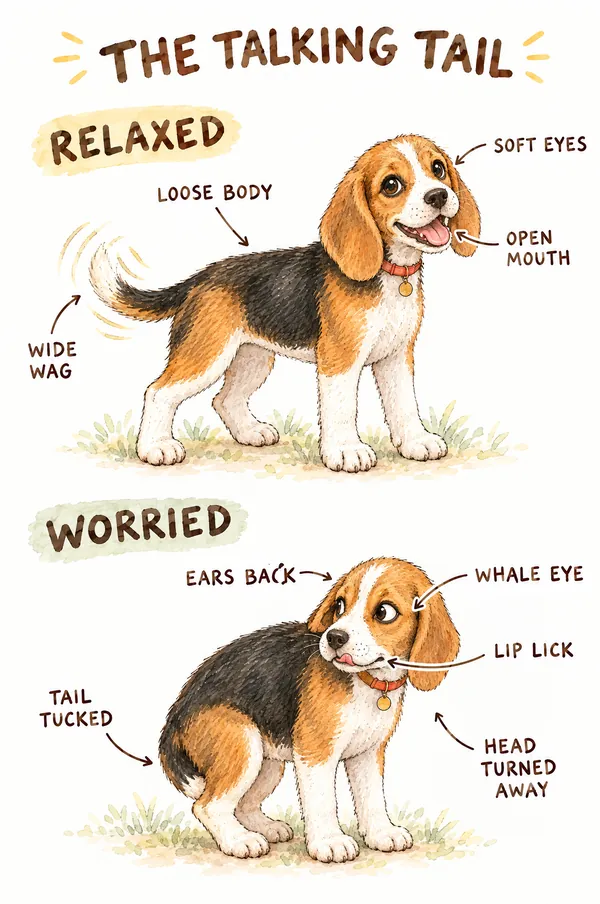
- Relaxed looks loose: soft eyes, an open mouth, a wide easy wag, and a puppy who keeps coming back for more.
- Worried looks tight: ears back, lip licks and yawns when he isn't tired or hungry, whites of the eyes, a tucked tail, freezing.
- Small signals are him asking politely. When you see them, slow down and give him space.
- A growl is a warning, not bad manners. Don't punish it. Figure out what caused it.
- Reward-based training only. Sudden grumpiness or biting when touched means a vet check first.
Try it
Tap Meatball to change his mind
Tap his ears, eyes, mouth, tail, body or paws, or use the switches. Watch how one worried signal changes the whole read.
No worried signals
Relaxed and happy
Loose body, soft eyes, easy wag. Carry on, and keep the play short and sweet.
When to get help
Call your vet first. They'll check for pain, then point you to the right help.
- He growls, snaps or goes stiff around a child or another pet.
- A bite breaks skin, especially after his adult teeth are in.
- He suddenly bites or snaps when one spot is touched. Pain often shows up as behavior first.
- He guards food, toys or a spot with growling, freezing or snapping.
- His fear is getting worse week to week, or he hides or trembles much of the day.
- He panics, destroys things or has accidents every time you leave.
- Anything makes you afraid of your own puppy.
For bigger behavior worries, ask about a veterinary behaviorist (a vet with specialty training in behavior, letters DACVB; search at dacvb.org) or a reward-based trainer who can tell you exactly what they do when a puppy gets it wrong. The American Veterinary Society of Animal Behavior recommends reward-based training only, and steering clear of choke, prong and shock collars and anyone who talks about being the alpha. Getting help early is a sign you're paying attention, not a sign you failed.
Questions I get every day
Should I punish my puppy for growling?
No. A growl is a warning, and it's useful information. Punishing it can make fear and aggression worse, and a puppy who learns not to growl may skip straight to a snap. Calmly give him space, figure out what caused it, and call your vet if it keeps happening.
Does a wagging tail always mean a happy puppy?
Not always. The happy one is a loose, wide wag with a wiggly body that keeps coming back for more. A wag that comes with a stiff body, ears pulled back or the whites of his eyes showing isn't a relaxed puppy. Read the tail together with the ears, eyes, mouth and body.
Why does my puppy yawn and lick his lips when he's not tired or hungry?
Those are two of the most common signs of stress in dogs. They often show up during hugs, handling, vet visits or busy moments. When you see them, slow down and give him a little space.
What kind of training is best for a worried puppy?
Reward-based training. The American Veterinary Society of Animal Behavior recommends reward-based methods for all dog training and advises against choke, prong and shock collars and "alpha" methods. For fear or aggression, start with your vet, who can check for pain and refer you to a veterinary behaviorist.
Where this comes from
- American Veterinary Society of Animal Behavior (AVSAB). Humane Dog Training Position Statement. 2021.
- AVSAB. Position Statement on Puppy Socialization. 2008.
- American College of Veterinary Behaviorists. Find a Diplomate. dacvb.org.
- Asher L, et al. Teenage dogs? Biology Letters. 2020;16(5):20200097.
General education, not veterinary advice. Your vet's plan for your puppy comes first.