





Parvo: what does every puppy owner need to know?
 By Dr. Steve Pelton, DVM, a small-animal vet since 2000.
The short answer
- Parvo is a tough virus that attacks a puppy's gut and his infection-fighting cells. It's serious, and it's very preventable.
- It hits hardest between 6 weeks and 6 months, mostly in puppies who haven't finished their shots.
- Not done with shots, and vomiting or diarrhea plus tired, flat or not eating? Go now, and say "parvo" when you call.
- With early hospital care, most puppies survive. The best protection is boring: finish the whole series.
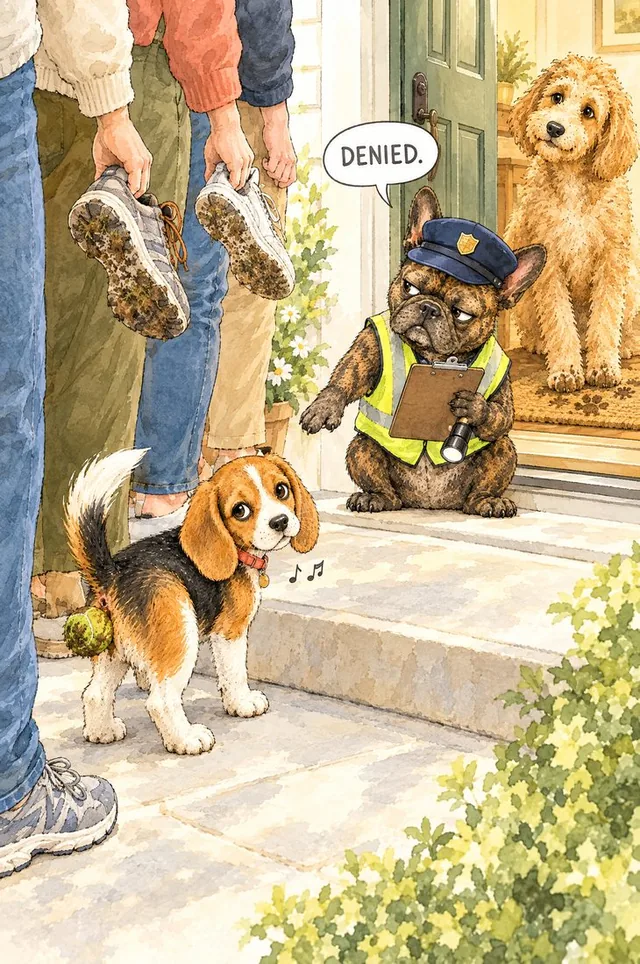
If your puppy isn't done with his shots, parvo is the one to know about. Every dog on this site is a cartoon, and so is nearly every problem. Parvo doesn't get a cartoon. It's the reason the puppy vaccine series exists, and the good news is that you're already doing the thing that protects him most, which is paying attention.
What parvo actually does
Canine parvovirus goes after the cells that divide fastest. In a puppy, two of the busiest are the lining of the gut and the white blood cells that fight infection. When the gut lining breaks down, he vomits, has diarrhea and can't hold onto fluids, and bacteria can leak out of the gut. At the same time, his defenses are down. That's why parvo can turn a playful puppy into a very sick one in a day or two.
 GO NOW
Not done with his shots? Go now if:
- Vomiting or diarrhea plus being tired, flat, weak or not eating
- Vomiting over and over, or he can't keep water down
- Any blood in the poop plus vomiting or tiredness
- A toy-breed puppy who's weak, wobbly, trembling or "out of it"
Call on the way and say the word parvo. Many clinics will ask you to wait in the car and bring him in a separate way, to keep other puppies safe.
Bloody diarrhea in a puppy who's still acting normal: call your vet right away, and don't wait overnight. They'll tell you how fast to come in.
From exposure to signs
You never see the moment he picks it up. Signs usually start 5 to 7 days later, but it can be anywhere from 2 to 14. So if he went somewhere risky last weekend, the next two weeks are the ones to watch.
Timeline in days after exposure.
- Day 0: exposed, maybe from a shoe, a paw or a patch of grass
- Day 4 to 5: a sick dog starts shedding virus, often before he looks sick
- Day 5 to 7: when signs usually start
- Day 2 to 14: the full range
It often starts quietly: a puppy who's tired, won't eat and may have a fever. Within a day or two come vomiting, diarrhea (often bloody, but not always) and then dehydration.
Tap a stage
How protected is he?
Parvo hits hardest between 6 weeks and 6 months, mostly in puppies who haven't finished their shots. Here's how the shield builds through the series.
8 to 12 weeks
Partly, maybe
Shots are under way, but there's no way to know whether any one of them took yet. Treat him as not protected.
Ages are typical, not a schedule. Your vet sets your puppy's exact dates, and a puppy who starts late gets a slightly different plan.
When a puppy who's had shots gets parvo, the most common story is that the series wasn't finished yet, not that vaccines don't work. Why puppies need a whole series of shots.
Why parvo spreads so easily
Parvo is one of the toughest viruses a dog can catch, and a dog who looks perfectly healthy at the park can be leaving it in the grass.
Poop from a sick dog
Infected dogs shed huge amounts of virus in their poop, starting before they look sick and for about 10 days after they recover.
Ground and grass
Indoors it lasts at least 2 months. Outside, in shade and damp, it can last many months, possibly years.
Shoes, hands and paws
It rides home on the bottoms of shoes, on hands that petted another dog, and on your grown dog's feet.
Busy dog places
Dog parks, pet store floors, rest stops and shelters, anywhere lots of dogs with unknown shots have been.
The Parvo Patrol: keeping it out of your house
- Finish the whole vaccine series. Everything else here is a backup.
- Follow a safe-outings plan: carry him, use a cart or a clean blanket, and skip the dog park for now.
- Shoes off at the door, or wiped, after dog parks, shelters or pet stores.
- Wash your hands after petting other dogs and before you handle your puppy.
- Only healthy, grown, vaccinated dogs visit.
- Ask your vet which disinfectant to use at home, because many household cleaners don't kill parvo.
You don't have to keep him in a bubble. The socialization window starts closing before the shots are done, so careful outings matter too. Carry him, keep his paws off busy floors, and pick healthy, vaccinated dog friends. Where he can go before his shots are done and the socialization clock walk you through it.
Cleaning up: what kills parvo
- Many household sprays and wipes don't reliably kill parvo. The common quaternary ammonium cleaners are on that list.
- Bleach-type disinfectants and a few others made for kennels and clinics do work, but only on hard surfaces you've cleaned first. Poop and dirt protect the virus.
- Carpet, furniture, grass and soil are very hard to disinfect. Outside, the virus lasts longest in shade and damp, so sun and drying help wear it down over time.
- Your vet's office can tell you exactly what to use, how, and on what. Ask before you start scrubbing.
Bringing a puppy into a home where a dog had parvo
Talk to your vet first. Only fully vaccinated puppies or grown dogs should come into a home where a dog recently had parvo. Because the virus can live in a shady yard for a very long time, your vet will help you decide how long to wait and how to clean up.
If it is parvo: what happens next
Your vet can test a stool sample in the clinic, usually along with an exam and often bloodwork. There's no pill that kills the virus. Treatment supports him while his own body fights it off: fluids for what he's losing, medicine for nausea and pain, protection against the gut bacteria, and careful nursing. For most puppies that means a hospital stay, often several days.
With hospital care, most puppies survive, over 90 percent with aggressive treatment. It's still a hard week, and it isn't cheap. The puppies who do best are the ones who get there early, and that's the whole reason for the go-now list.
Got a puppy with no shots at all?
It's never too late to start. Book a vet visit this week, keep him home and away from other dogs until your vet says otherwise, and start the series. If money's tight, tell your vet your budget up front and ask what options they have. A puppy with his shots started is far better off than one waiting for the perfect time.
Distemper: parvo's quieter partner
Distemper is the D in the combination puppy shot. It's less common where most dogs are vaccinated, but it hasn't gone anywhere: shelters still see outbreaks, and raccoons, foxes and skunks can carry it. It spreads mostly through the air, from coughs and sneezes, and through close contact.
- First, cold-like: fever, tiredness, not eating, a runny nose and eyes, sometimes a cough
- Then the gut: vomiting and diarrhea
- Later, sometimes weeks later: muscle twitching or seizures
Most puppy coughs and snotty noses are something milder, like kennel cough. What matters is how he's acting.
 CALL TODAYCoughing, or a runny nose or eyes, and also tired or not eating, especially if he isn't done with his shots: call your vet right away.
- GO NOWA seizure or muscle twitching.
The prevention is the same as parvo's: finish the series.
Vomiting but you're not sure it's parvo? Tap through which door a vomiting puppy is at.
What to ask your vet
- Where is he in his series, and when is the shot that counts most?
- Which outings are safe for him this week?
- Is parvo common around here right now?
- What disinfectant should I use at home, and how?
- A dog had parvo at our house. How long should we wait, and how do we clean up?
- If he gets sick at night, where should we go, and what will it cost?
Questions I get every day
My puppy has had two shots. Is he protected from parvo?
Partly, maybe, but not reliably yet. Until his mother's antibodies are gone, nobody can know whether any one shot took. That's why the series runs past 16 weeks, and why the last shot counts most. Protection is usually there about 5 days after that last one.
Can my puppy get parvo in our own backyard?
It's much less likely, and the backyard really is one of the safest places he can be. But parvo can come in on your shoes, on a visiting dog or on a stray that crossed the yard last month, and it can sit there a long time. A yard is lower risk, not no risk.
Is it still parvo if the diarrhea isn't bloody?
It can be. Parvo diarrhea is often bloody, but about a quarter of dogs with parvo have diarrhea without blood. Plain diarrhea in a tired puppy who isn't done with his shots is a parvo worry until your vet says otherwise.
Can a puppy survive parvo?
Yes. With hospital care, most puppies survive, over 90 percent with aggressive treatment. There's no pill that kills the virus, so treatment supports him while his body fights it: fluids, medicine for nausea and pain, and protection from gut bacteria. The puppies who do best get there early.
Can my grown dog bring parvo home to the puppy?
A healthy, vaccinated adult is very unlikely to get sick from parvo, but the virus can ride home on his paws and fur, the same way it rides on your shoes. Wiping paws after walks in busy dog areas is a good habit until the puppy finishes his shots.
We lost a dog to parvo. Can we ever have a puppy again?
Yes. Talk to your vet before the new puppy comes home. Only fully vaccinated dogs should come into a home where a dog recently had parvo, so your vet will help you plan the cleanup and the timing. I'm sorry about your first dog. That's a hard way to learn about parvo.
Where this comes from
- Merck Veterinary Manual. Canine parvovirus infection (parvoviral enteritis) in dogs. Full review June 2025. (Ages most at risk; signs and timing; about 25% without blood; shedding; survival indoors and outdoors; disinfectants; a new puppy in a home that had parvo; survival with hospital care.)
- Merck Veterinary Manual. Canine distemper. Full review November 2022, updated June 2026.
- American Animal Hospital Association (AAHA). Canine Vaccination Guidelines, 2022, with the 2024 update. (Parvo in dogs under a year; unfinished series and "vaccine failures"; final dose after 16 weeks.)
- World Small Animal Veterinary Association (WSAVA). Guidelines for the vaccination of dogs and cats, 2024. (Doses every 2 to 4 weeks, final dose at 16 weeks or older.)
General education, not veterinary advice. Your vet's plan for your puppy comes first.