Food
What should I feed my puppy?
By Dr. Steve Pelton, DVM. Small-animal vet since 2000.
The short answer
- A complete puppy food: the label says complete and balanced for growth, or for all life stages.
- Headed for 70 pounds or more? The label should also say "including growth of large size dogs."
- Three or four small meals a day for young puppies, down to two by about 6 months. Toy breeds stay on more meals longer.
- Switch foods slowly, over about a week. Treats stay around 10%. No raw diets, and I steer people away from grain-free.
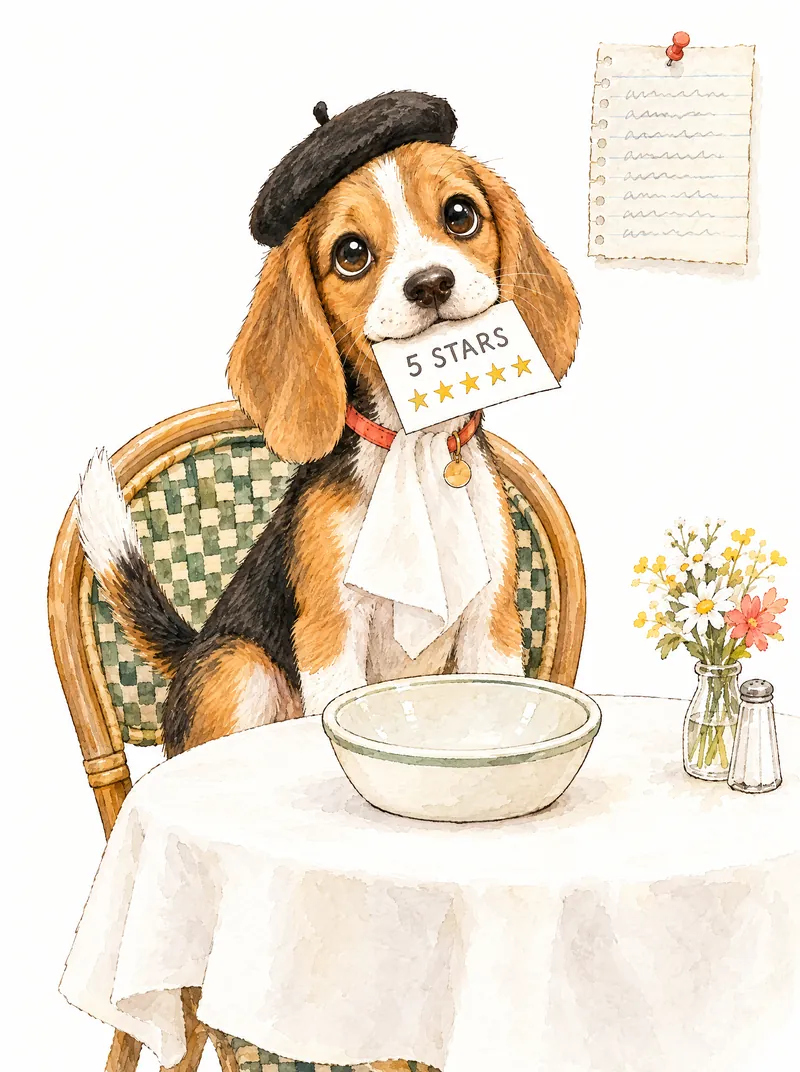
Your puppy's review: five stars
Meatball gives every food five stars. The bag too. Your puppy's opinion on food is "yes," so your job is to have a better one. Good news: it's simpler than the pet food aisle makes it look.
Skip the words on the front of the bag (natural, ancestral, premium). Flip it over and find the small statement that says what the food is complete and balanced for. That one line tells you more than everything on the front.
Quick picker
Two taps to a plain-English food plan
Pick both to see his plan.
General education, not veterinary advice. Your vet's plan for your puppy comes first.
Drag through the week
Switching foods without a tummy ache
25% new / 75% old
Mix a little more of the new food into the old food each day. If his poop gets soft, slow down and stay on the last step a few extra days.
Bring a few days of the old food home from the breeder, shelter or rescue so you can switch slowly. Don't switch foods to fix diarrhea on your own; call your vet.
Picking a company: five questions
I don't name brands. What I do tell people is to pick a complete puppy food from a company that employs real nutritionists and runs feeding trials. The World Small Animal Veterinary Association suggests asking any pet food company:
- Do you employ a qualified nutritionist (a PhD in animal nutrition, or a board-certified veterinary nutritionist)?
- Who formulates your diets, and what training do they have?
- What quality-control measures do you use?
- What research have you done, and is any of it published?
- Was "complete and balanced" set by feeding trials or on paper? Can you give me the calorie content?
A company that gets vague about who formulates its food has told you something. Your vet can also tell you which foods they're comfortable with.
Big puppies: a different label
Big-breed puppies grow fast, and they don't control how much calcium they absorb as well as smaller puppies. Too much calcium and too many calories during that growth are linked to bone and joint problems. Large-breed puppy food keeps both in a safer range, so don't add calcium, and don't switch him to adult food early to "slow him down." Don't underfeed, but keep him lean.
Extras that are fine, and ones that aren't
Plain carrots, green beans, a bit of banana or plain pumpkin are fine for most puppies, inside that 10%. No seasoning, butter or onions. Grapes, raisins, onions, garlic, chocolate and anything with xylitol stay off the list entirely.
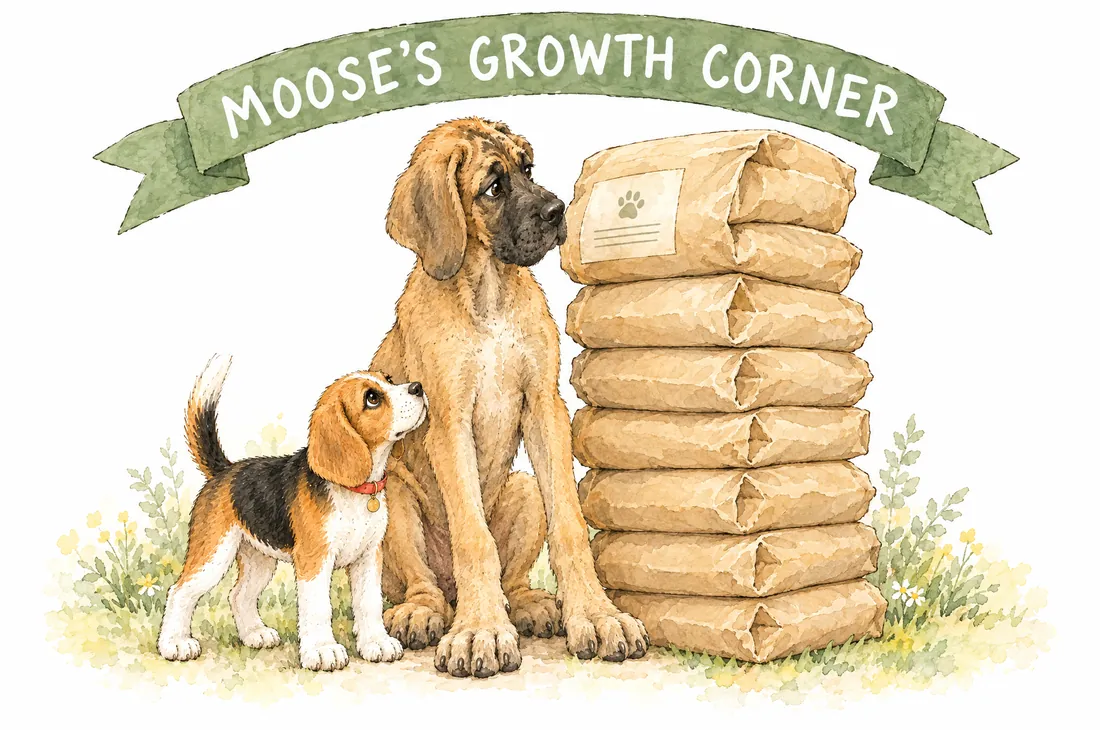
Not sure he's eating the right amount? Check his growth lane and ribs. Giant breed? Read Moose's corner.
Questions I get every day
What should I look for on a puppy food bag?
The small nutritional adequacy statement, usually on the back. It should say the food is complete and balanced for growth, or for all life stages. If it says adult maintenance, it isn't made for a growing puppy. If it says intermittent or supplemental feeding, it isn't a complete diet.
Does my big puppy need large-breed puppy food?
If he'll weigh 70 pounds or more as an adult, yes. Look for "including growth of large size dogs (70 lb. or more as an adult)" and skip foods that say "except for" large dogs. That wording keeps calcium and calories in a safer range for fast-growing bones. Don't add calcium on top.
How many times a day should I feed my puppy?
Most young puppies do best on three or four small meals a day, dropping to two by around 6 months. Toy breeds may need more frequent meals for longer, because a tiny puppy who goes too long without food can run low on blood sugar. Your vet will tailor it.
Is grain-free food better for puppies?
I steer people away from it. The FDA has been looking into reports of heart disease in dogs eating certain diets, many of them grain-free, and the question isn't closed. Grains aren't filler, and most dogs digest them fine. Unless your vet has a specific reason, there's no need to avoid them.
Can I feed my puppy a raw diet?
I don't recommend raw diets for any dog, and especially not puppies. Raw meat can carry bacteria like Salmonella and parasites, puppies have young immune systems, and those germs can spread to people in the house, including kids. If you want to feed homemade, work with a board-certified veterinary nutritionist.
When should my puppy switch to adult food?
Small and medium dogs usually switch somewhere around 9 to 12 months. Large and giant breeds stay on large-breed puppy food longer, often 12 to 18 months or more, until growth slows. Your vet decides using his growth chart and body condition. Switch slowly, over about a week.
Where this comes from
- Association of American Feed Control Officials (AAFCO). Dog Food Nutrient Profiles and nutritional adequacy statement wording, including "growth of large size dogs (70 lb. or more as an adult)."
- World Small Animal Veterinary Association (WSAVA) Global Nutrition Committee. Guidelines on Selecting Pet Foods. Updated March 10, 2021.
- Tufts University Cummings School of Veterinary Medicine. Large-breed puppy nutrition and calcium.
- American Animal Hospital Association (AAHA). 2019 Canine Life Stage Guidelines.
- Companion Animal Parasite Council (CAPC). General Guidelines, updated April 24, 2025 (feed commercial or cooked food, not raw diets).
- US Food and Drug Administration (FDA). Investigation into potential link between certain diets and canine dilated cardiomyopathy.
General education, not veterinary advice. Your vet's plan for your puppy comes first.