





Thanksgiving travel and a new puppy: when can he board?

If you've got Thanksgiving travel coming up and a new puppy at home, this is probably the week you're trying to figure out where he's going to stay. It's a question I hear a lot this time of year, and the answer mostly comes down to one date on his vaccine record: his last puppy shot.
When can my puppy start daycare or boarding?
Usually four or five days after his last puppy shot. That last shot comes after 16 weeks, so most puppies are somewhere around 4 to 5 months old before daycare or a boarding kennel makes sense.
The reason it takes that long is his mom. A puppy is born with some protection from her antibodies, and that shield fades at a different week for every puppy. While it's still there, it can block the vaccine, and nobody can see the week it drops. So we keep giving the combination shot every 3 to 4 weeks until after 16 weeks, when mom's shield is gone in almost every puppy. That's why the last one is the shot that matters most.
Why can't he board a little early?
Because a kennel or a daycare is exactly the kind of place the puppy series is protecting him from. There are lots of dogs, and nobody knows every dog's health or shot history. Parvo spreads through the poop of sick dogs, and they shed it before they look sick. It rides in on shoes and paws, and outside in shade and damp it can last many months.
Good places clean hard, and that helps a lot. A puppy who isn't done with his series is still the one most at risk.
What shots will the daycare or kennel ask for?
Daycares, boarding kennels and groomers set their own vaccine rules on top of the four or five days. They'll want to see his records, and many want a kennel cough shot too.
Kennel cough (Bordetella) is a lifestyle shot, meaning not every puppy needs it. Most end up getting it anyway, because daycare, boarding, grooming and classes ask for it. Some places also ask about canine flu, which is two doses 2 to 4 weeks apart, so if that's on their list, ask early.
What if he's too young to board over Thanksgiving?
That's pretty common with a puppy who came home this fall. For right now, keep him out of places where lots of unknown dogs go.
A sitter who comes to your house is usually the safest choice, since he stays in his own space with his own crate. A friend or family member whose dogs are healthy and vaccinated can work too, as long as they'll keep his routine. Taking him along is fine if you keep his paws off the busy dog spots, like the pet area at a rest stop. Wherever he goes, send his crate, his food and his schedule with him.
Once he's old enough, start small. A half day of daycare before a long weekend of boarding lets him get used to it, and lets you see how he does.
After daycare or boarding: which door?
 WATCH
Sleeping hard the first night, or a little off his usual schedule for a day while he settles back in at home.
 CALL TODAY
A honking cough, but he's bright and eating. It could be kennel cough. A cough with tiredness, not eating, fast breathing or thick discharge from his nose: call right away.
 GO NOW
Trouble breathing, or blue or gray gums. If he isn't done with his shots, vomiting or diarrhea plus being tired, weak or not eating.
One thing to do this week
Call the daycare or kennel before you book and ask what shots they need and how far ahead. Then find the date of his last puppy shot on his record and count four or five days forward. If Thanksgiving lands before that, you've still got time to make a different plan.
Also on the blog
- How long does it take to potty train a puppy? Most puppies are fairly reliable around 4 to 6 months, and some take longer. How often he needs to go out right now, the setbacks that are normal, and when it's a bladder infection instead
- The full daycare and boarding post
On the site
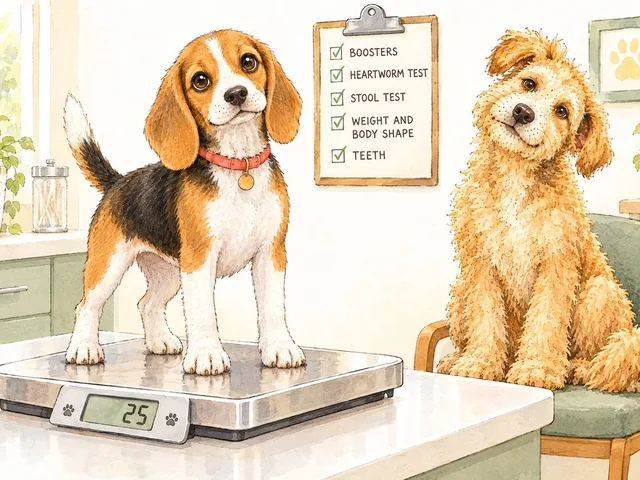 Why so many puppy shots, with the usual schedule by age
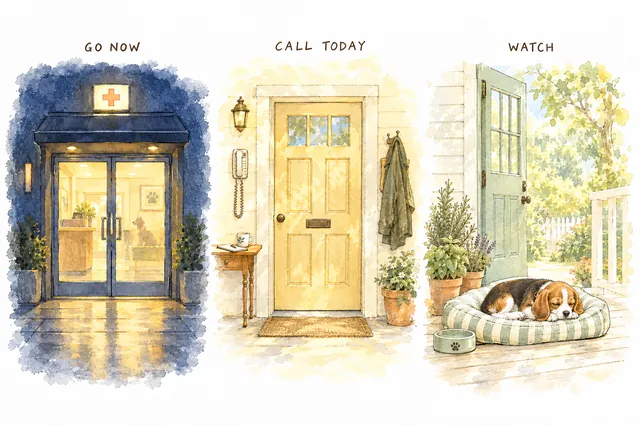 Is this an emergency?, the three doors in one place
Talk soon, Steve
Dr. Steve Pelton, DVM, Hearthstone Animal Clinic, Cypress TX. General education, not veterinary advice. Your vet's plan for your puppy comes first.
General education, not veterinary advice. Your vet's plan for your puppy comes first.