





Your puppy's socialization clock starts before the shots are done
 · Dr. Steve Pelton, DVM

Congratulations on the new puppy. The question I hear most in those first few visits is some version of "when can he go out?" The answer's a little tricky, because two clocks are running at the same time in his first few months, and they don't line up.
Once a month I'll send one practical puppy tip, the same thing I'd walk you through across the exam table. This first one is about those two clocks.
Two clocks that don't line up
Read the transcript
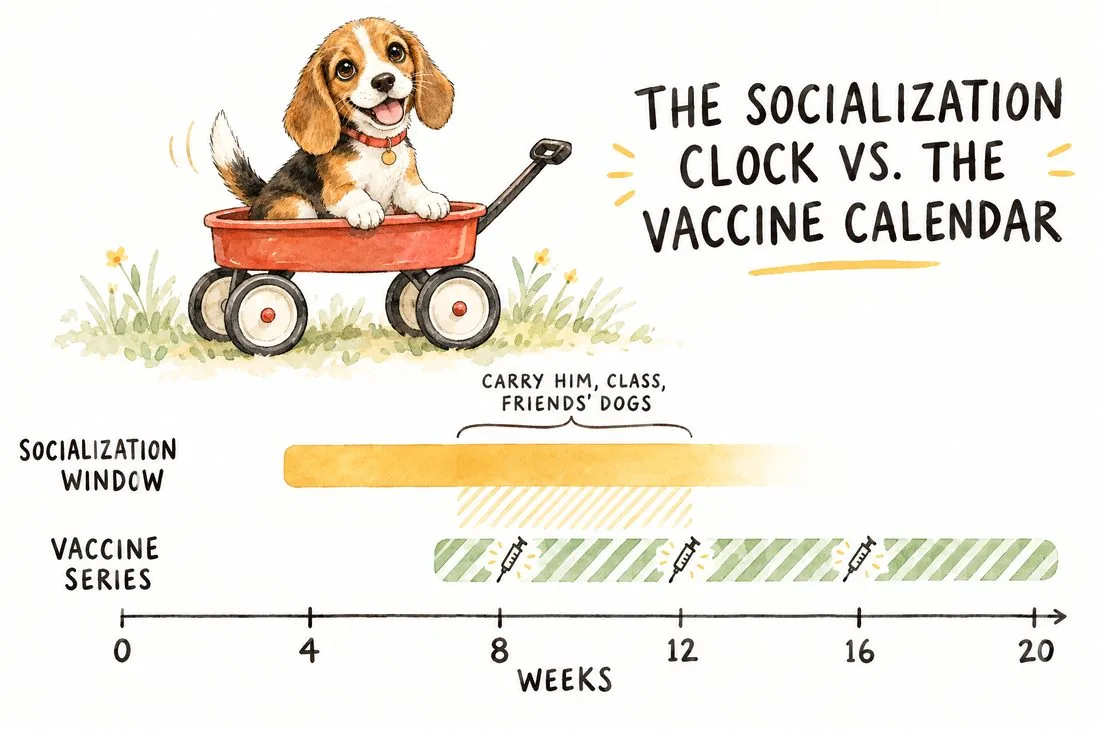
Keep him safe from parvo. Get him out to meet the world. Both are right. His socialization window starts closing around 12 to 14 weeks. The shots don't finish until after 16 weeks.
If you wait for the last shot, you miss the window. Behavior experts call early, safe socializing the standard of care. So start now, carefully. Carry him in public. Meet healthy, vaccinated dogs you know.
Try a puppy class that checks vaccine records. Keep outings short. Tucked tail, ears back or hiding means too much. Back off and try another day. Dog parks come four or five days after the last puppy shot.
Your vet's plan comes first. Try it yourself at newpuppy.vet.
The first clock is socialization. Young puppies have a window when new people, sounds, surfaces and friendly dogs get filed away as normal. It starts closing around 12 to 14 weeks, and by about 16 weeks most of it has passed. He'll keep learning after that, just more slowly, and fear is a lot easier to head off young than to fix later.
The second clock is the vaccine series. Puppies get a combination shot every 3 to 4 weeks from about 6 to 8 weeks old until they're past 16 weeks. So the socialization window is mostly closing right as the shots finish. If you wait for the last shot to start socializing, you've missed most of it.
Why so many shots
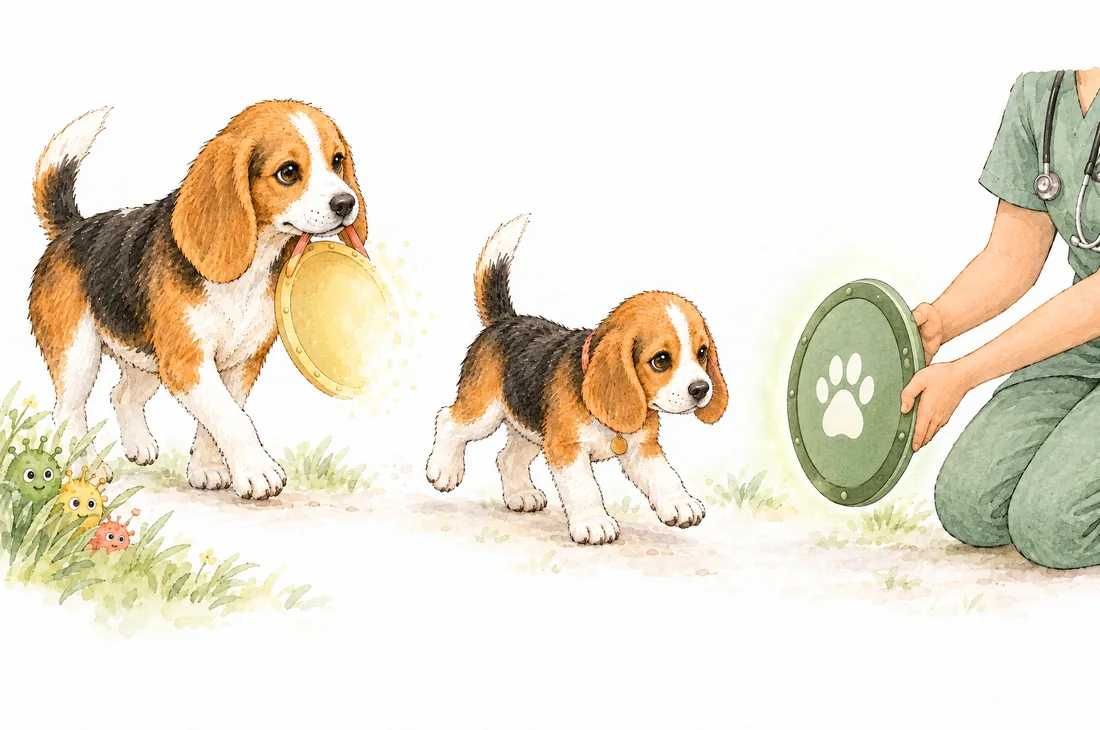
His mom is the reason. Her antibodies protect him early, but they can also block a vaccine, and nobody knows the week they fade for any one puppy. Each shot in the series is another chance to catch the moment her protection drops. The last one, given after 16 weeks, is the one that matters most.
If you miss a booster by a week, you usually don't start over. Just get back on track sooner rather than later, and your vet will tell you if he needs an extra one. Rabies is set by law, and in Texas it's due by 16 weeks, so check your own state's rule.
Safe outings before the series is done
For right now, think of it as the right dogs in the right places:
- A healthy, vaccinated adult dog you know is a great teacher.
- Puppy class can start as early as 7 or 8 weeks, as long as he had a first set of shots at least a week before the first class and a first deworming. I like an indoor class on cleanable floors that asks for vaccine records and uses reward-based training.
- Carry him, or pull him in a wagon, so he can see and hear new things without walking where unknown dogs have been.
- Skip dog parks and dogs whose health and shots you don't know until the series is done. Parvo lives in the ground for months.
Once the series is done, give it four or five days after the last puppy shot. After that, a good dog park is a great place for him to burn energy and learn dog manners.
After a puppy shot: which door?
 WATCH
WATCHSleepy for the rest of the day, a little sore where the shot went, a bit off his food, or a mild fever. That's pretty common.
 CALL TODAY
Still not himself after one day, or a bump at the shot spot that's growing, sore, or still there after about a month.
 GO NOW
Face or eyes swelling, hives, vomiting over and over, trouble breathing, or collapse.
One thing to try this week
Pick a few new things for him to meet this week, one at a time, with treats: a hat, an umbrella opening, the vacuum running in another room, a new kind of floor. Keep each one at a distance where he stays relaxed and curious. If he hides, trembles or can't settle, bring it up with your vet early rather than waiting for him to grow out of it.
On the site
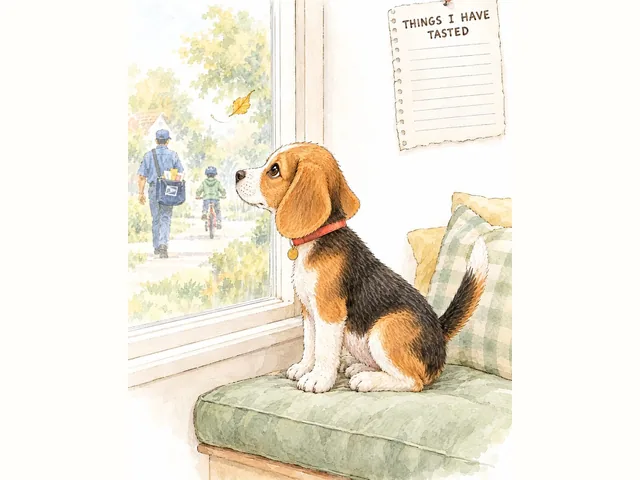 The socialization clock, where you can drag the weeks, sort safe outings and print a checklist
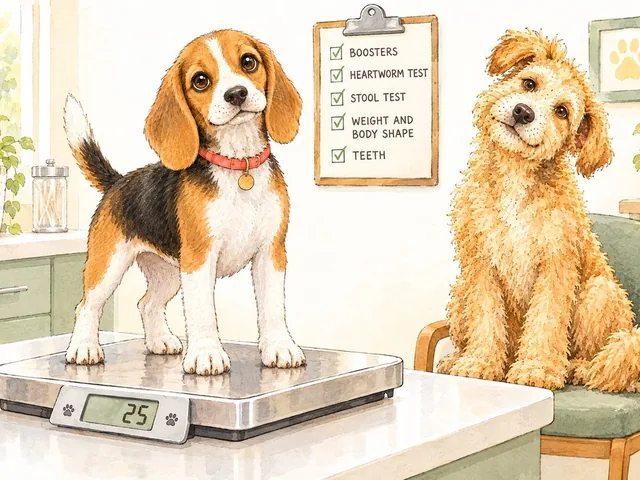 Why so many puppy shots, with the usual schedule by age
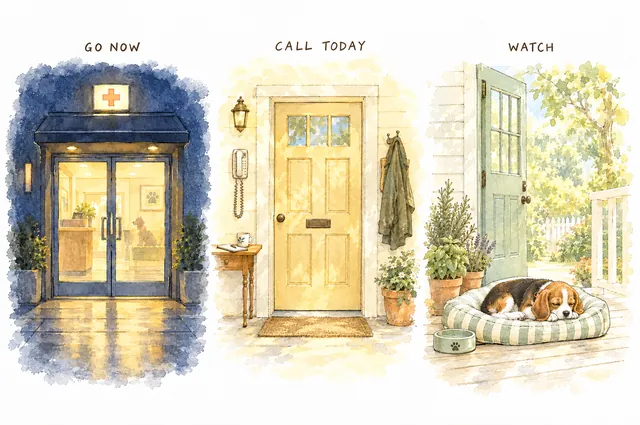 Is this an emergency?, the three doors in one place
Talk soon, Steve
General education, not veterinary advice. Your vet's plan for your puppy comes first.