





Why does my puppy need so many shots?
 · Dr. Steve Pelton, DVM
Quick answer
His mother's antibodies can block a vaccine, and nobody knows the week they fade. Each shot is another chance to catch that moment. The last one, given after 16 weeks, is the one that matters most.
Mom's antibodies protect a puppy at first. They also block the vaccine. Nobody knows the week they fade for any one puppy. That's why the series exists.
Read the transcript
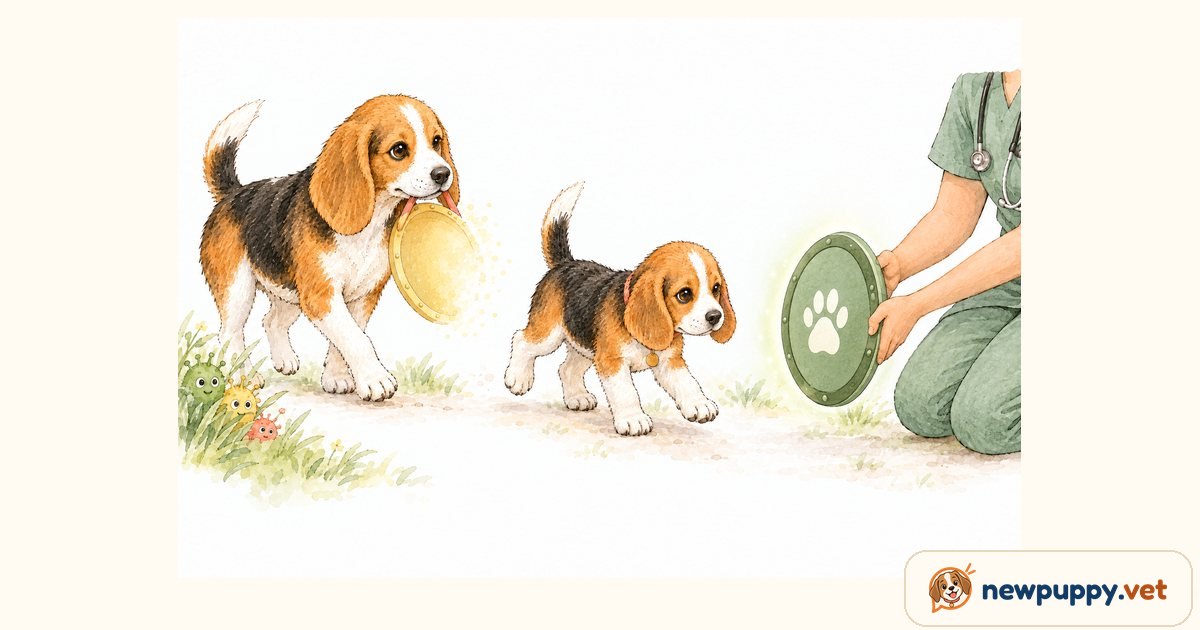
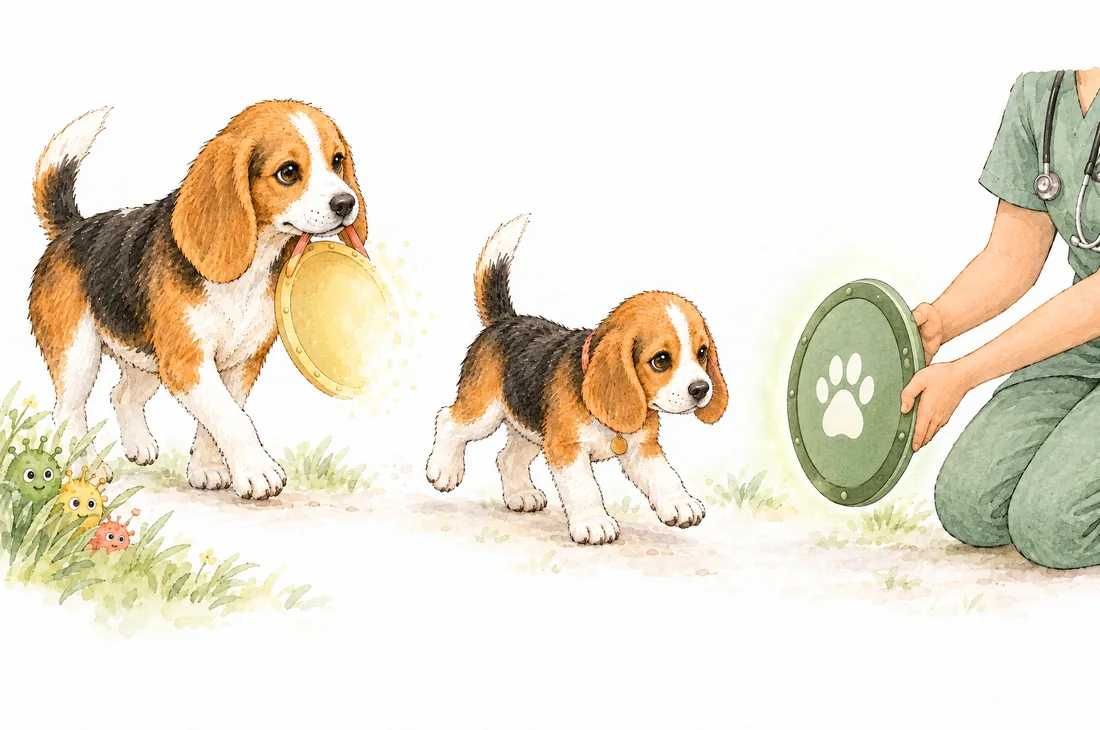
Why does a puppy need so many shots? Meet the Shield Relay. Mom passes her puppy a borrowed shield of antibodies. It protects him early on. But that shield fades at a different week for every puppy, somewhere around 8 to 16 weeks.
And while it's still up, it blocks the vaccine. So each shot is another chance to catch the moment mom's protection drops. That's why shots come every 3 to 4 weeks, until after 16 weeks.
In Texas, rabies is due by 16 weeks. Check your state. Dog parks? Wait 4 or 5 days after the last puppy shot. Lepto is on the AAHA core list. Dr. P decides by lifestyle, breed, size and where you live.
Try it yourself at newpuppy.vet. Your vet's plan comes first.
Why does my puppy need so many shots?
Because his mother's antibodies can block a vaccine, and nobody knows the week they fade. Each shot is another chance to catch the moment her protection drops. The last one, given after 16 weeks, is the one that matters most.
The 2022 canine vaccination guidelines from the American Animal Hospital Association say the same thing in clinic language. Maternally derived antibodies can block the distemper and parvo vaccines, so the doses repeat every 2 to 4 weeks until the puppy is older than 16 weeks. That paper also calls vaccination one of the most cost-effective ways of keeping a dog healthy. The price that matters is the one your own clinic charges for the series. Write it down in the first-year cost planner so the visits are a plan.
What is the usual puppy vaccine schedule?
A combination shot (distemper, adenovirus, parvo and usually parainfluenza) every 3 to 4 weeks from about 6 to 8 weeks old, until he's past 16 weeks. Rabies usually goes between 12 and 16 weeks. In Texas, the law says by 16 weeks. Lepto, if your vet recommends it, is two doses 2 to 4 weeks apart from 12 weeks. AAHA moved lepto to its core list in its 2024 update, and I still decide it puppy by puppy: lifestyle, breed, size and where you live. Ask your vet about your puppy's risk.
Shelter and breeder shots usually count when they're written down with a date and what was given. Bring the whole folder. The guide walks through what counts: Why so many puppy shots.
Is it normal for my puppy to be sleepy after shots?
Yes. Sleepy for the rest of the day, a little sore where the shot went, a bit off his food, or a mild fever. That's pretty common.
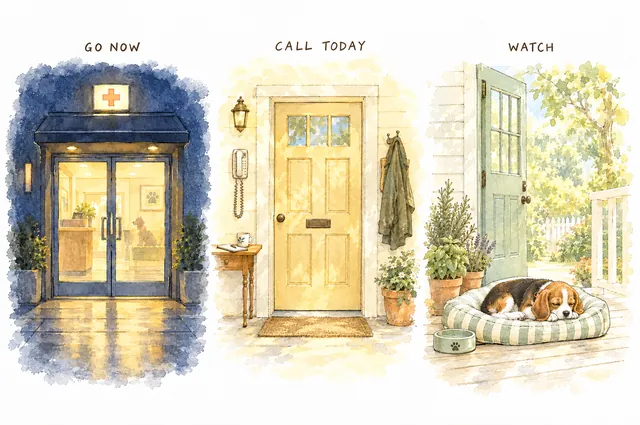
After a puppy shot: which door?
 WATCH
WATCHSleepy for the rest of the day, a little sore where the shot went, a bit off his food, or a mild fever. That's pretty common.
 CALL TODAY
Still not himself after one day, or a bump at the shot spot that's growing, sore, or still there after about a month.
 GO NOW
Face or eyes swelling, hives, vomiting over and over, trouble breathing, or collapse.
How long after the last puppy shot can he go to the dog park?
Give it four or five days after the last puppy shot before dog parks, daycare or boarding. Daycares, kennels and groomers set their own vaccine rules, and many want kennel cough too, so ask before you book.
Before that last shot, he can still meet the world in the safer places. A healthy, vaccinated adult dog you know, and a puppy class that checks records, fit while the series is still going. That other clock is on the socialization clock.
Parvo is the disease this schedule is racing. Outside, in shade and damp, it can last many months, possibly years. Plain diarrhea in a tired puppy who isn't done with his shots is a parvo worry until your vet says otherwise. The signs are on Parvo: what to know.
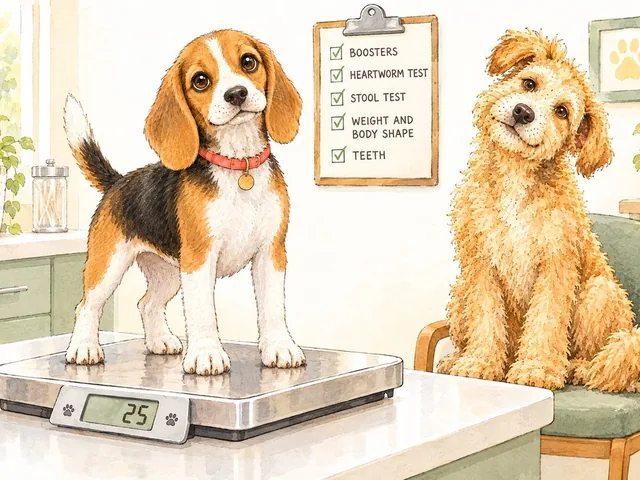 Why so many puppy shots, with the schedule by age
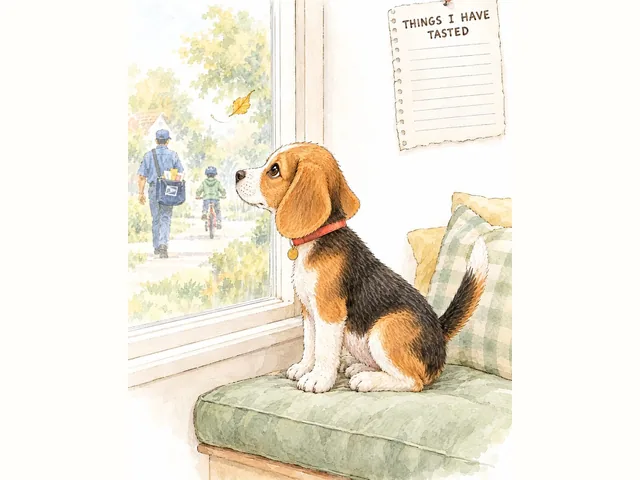 The socialization clock
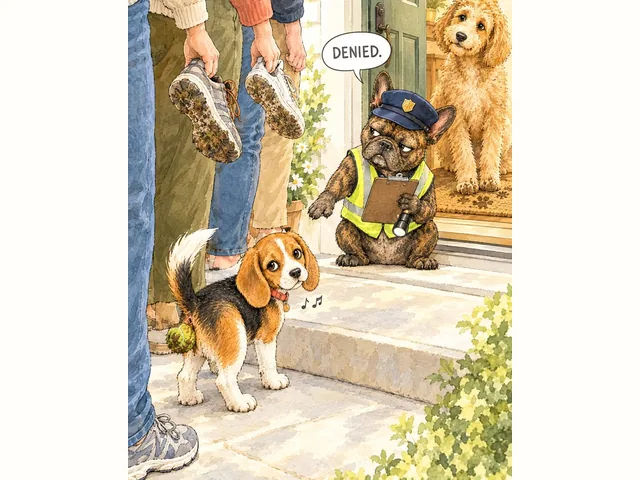 Parvo: what to know
 Is this an emergency?
The shots chapter is in The New Puppy on Kindle. The puppy email comes every two weeks: sign up here.
Questions owners ask
Why can't my puppy just get one shot?
Because his mother's antibodies can block a vaccine, and nobody knows the week they fade for any one puppy. Each shot in the series is another chance to catch the moment her protection drops. The last one, given after 16 weeks, is the one that matters most.
What is the usual puppy vaccine schedule?
A combination shot (distemper, adenovirus, parvo and usually parainfluenza) every 3 to 4 weeks from about 6 to 8 weeks old, until he's past 16 weeks. Rabies usually goes between 12 and 16 weeks, on your state's timing. Lepto, if your vet recommends it, is two doses 2 to 4 weeks apart from 12 weeks. Boosters come about a year later. Your vet's plan comes first.
Is it normal for my puppy to be sleepy after shots?
Yes. Sleepy, a little sore and a bit off his food for a day is normal. If he's still not himself after one day, call your vet. Face swelling, hives, repeated vomiting, trouble breathing or collapse means go now.
How long after the last puppy shot can he go to the dog park?
Give it four or five days after the last puppy shot before dog parks, daycare or boarding. Daycares, kennels and groomers set their own vaccine rules, and many want kennel cough too, so ask before you book.
General education, not veterinary advice. Your vet's plan for your puppy comes first.